Everyone is going to focus on the discounts thing, but I think this is the real USP (over a standard account):
> Create a single or multi-user business account, approve orders
I've been in a lot of companies where they want to offload buying (e.g. office supplies, computer equipment) but don't have a dedicated department to oversee it, and don't really want to be handing out the company credit card to every employee who might need it.
Amazon's new product has two benefits: You don't have to give other employees the company credit card (presumably) and the orders come back to management for final approval. It is like having your own buying department in terms of friction (as a lot of buying departments seek final approval from management anyway).
This mostly applies to small purchases. Big purchases (e.g. servers, furniture, etc) will likely remain invoiced by the normal means even if just for cashflow. But business I've worked in spend a lot more than you'd think on Amazon just buying "day to day" bits and pieces (that are often cheaper than Staples, or similar local places).
A multi-user business account is even bigger when you consider this is more than just the sale of physical products. It's also computing services via AWS, hiring remote workers via Mech Turk, and books+apps+other virtual goods via Kindle/App marketplace.
Amazon just launched local services too, so this could let an authorised employee hire contractors under a managed, audited, workflow.
(I don't know if all of those services are available now, but I bet they will be in the future.)
> Create a single or multi-user business account, approve orders
This alone is a killing point. If all the orders to the same company (location) are aggregated and shipped based on a predefined schedule (like every Monday).
And with this, pantry can be filled with food that people actually want.
Based on Amazon's choice of clipart images (bulk janitorial supplies) and verbage (lab beakers, break room snacks) they chose to highlight this launch, it looks like AmazonBusiness is competing with companies like Global Industrial[1], ULINE[2], etc more so than Office Depot and Staples.
Most of the items (paper, pens, etc) people bought from Office Depot, they could get already get from the normal amazon.com/office.../ [3]
The integration they offer with businesses accounting systems' purchase order workflow may be another enticing feature.
Unrelated, but have you looked at the high end (+$100) AmazonBasic items? Monitor swing arms, paper shredders, a fire pit, and a gas-powered patio heater. Tripods get an honorable mention at $80.
I'm not sure who these are being sold to, and why under the Basics label.
What's so unclear here? This is the store brand, and it is often times nicer than competition at the price. I have an AB branded camera bag, and it's great. I have also bought cables, and other small accessories from them and they have been of good quality. If I need a monitor arm and can get one for $100 from Amazon or $140 from another manufacturer I wouldn't think twice and just get the AB one.
Basics was launched to compete with the likes of Monoprice. And due to the pricing structure of FBA, it doesn't make much sense for 3rd parties to sell items through Amazon for under $10. The majority of Basics items are inexpensive to take advantage of this. Almost every item in the Basics catalog are items that a person will buy at least once a year.
How many copper fire pits do you think the average person buys per year?
My Basics purchases so far: mouse, bluetooth keyboard, capacitive stylus, travel case for a portable hard drive, HDMI cable, USB extension cable, USB hub.
Here's the first page of results if I search Amazon for "amazonbasics": "portable power bank", USB--Lightning cable (6 feet) (I assume this is for connecting an iPhone to a USB port?), 67-inch monopod, bluetooth "audio receiver", travel case for small electronics, dual monitors mounting arm, USB wall charger, laptop backpack, microUSB--Lightning adapter, 24 pack of microfiber cleaning cloths, 8-pack of AA rechargeable batteries, USB--Lightning cable (3 feet), GoPro carrying case, double rod freestanding closet, large portable bluetooth speaker, 12 pairs of banana plugs (6 red, 6 black).
None of those, except possibly the cleaning cloths, are items I'd expect someone to buy once a year.
I'm not exactly a good data point because I hate buying things without a good reason and buy stuff as infrequently as possible. But I also keep good records of my purchases. On average every year despite being anti-consumerism* I will buy one set of rechargable batteries, one cable, one charger, one protective case, one adapter. (So far only one of my purchases have been from Basics.)
8 of 16 of the search results fit this (rather arbitrary) "once a year" description.
Anyway, on your own purchases. Stylus, case, cable, cable. Basics has only been around for six years. And you really need to count all of the non-Basics purchases, because that is what Amazon is trying to capture.
* I don't feel this way, but multiple people have told me the economy would collapse if everyone acted the way I do.
But at one cable a year, you're not even close to buying each cable product every year, nor to buying each product that you're a customer for every year. If I fit the model you describe ("the items in the catalog are items that a person will buy at least once a year"), I wouldn't be buying one cable a year -- I'd be replacing every one of my cables every year. Instead, I never replace them at all, making them items that I bought once.
If you want to say "the items in the catalog fall into categories, and a customer will typically buy a single item from any given category once a year"... then you've descended into meaninglessness. You can categorize fire pits however you want. They'll fit that definition some ways and they won't fit other ways.
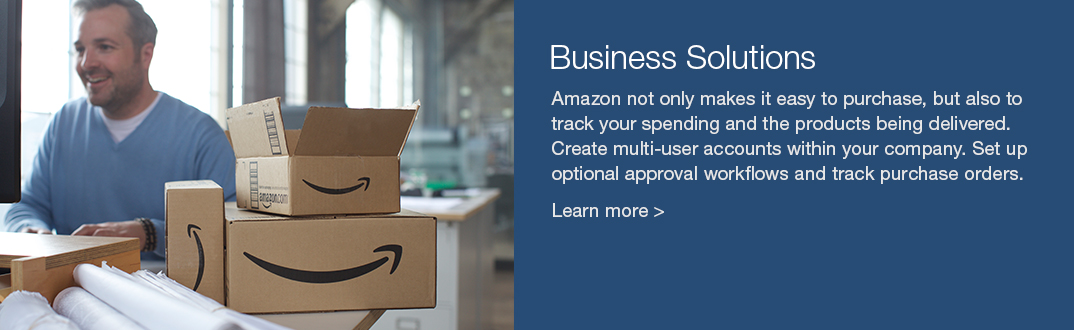
Unconstructive nitpick: the text quality in the images on that page is awful. Very aliased, and the letters seem kind of randomly sized and kerned. It's quite strange.
It has always seemed freaky to me that Amazon still uses images for paragraphs of text. I have assumed it is because the real-world web is more broken than I know.
Amazon has an incredibly tightly packed homepage with images and text. that's an obscene challenge to layout without obscuring content or missing up proportions. The inside pages use regular layout and are more liberal
Like most Amazon services, its a "will this work and make money, backfill if needed."
I have nothing against big A, they often use this strategy to try a bunch of stuff out and see if it works, almost always at a loss, and see how they can make money off of it.
Anyone who has looked into Glacier (for instance) will see that Amazon probably didnt buy a bunch of crazy robots, but is more likely selling EC2 at a loss to see if anyone thinks this is a good idea, and then some sort of plan backing it when they see enough volume to care.
Amazon hasn't publicly stated what technology Glacier is based on.
It's been speculated that instead of throwing out previous generation AWS hardware, they're simply repurposing then into cheap storage nodes for Glacier.
I can well imagine it started that way, but the density of tape over disk makes it seem likely to me that by now they're on custom versions of Spectra tape libraries, which pretty much fits into the "Try selling it, if it sells, make something cheap to run it" philosophy.
Yeah, that stood out to me too. I feel like these were design proofs that someone just threw on the page instead of building them out. Possibly someone who doesn't do much web dev. Even the markup is odd: tables with <br/>'s between them for the image rows and each image link is using an image <map> that spans the entire image instead of just using an anchor.
But it is broken, the menu is made of images, as is much of the copy. It's not friendly for search (not just search engines, but Cmd + F, etcetera.) – it's not accessible, and it's difficult to read. It is broken.
I even checked the URL to make sure it wasn't a phishing attempt. It's very lazy work from Amazon.
Yeah, strange. But it makes sense, if you think about it. You're guaranteed that the images work on all devices, especially since mobile browsers are pretty good at resizing images. You don't have to spend time on HTML/CSS. Most importantly, I'm willing to bet that the overlap between people using old computers with IE6 browsers, and businesses interested in using Amazon Business, is greater than we would imagine.
This is a great idea. It's amazing how many businesses keep Office Depot and Staples (and other office supply companies) on life-support simply because they're setup to handle corporate accounts. So now there's almost no reason to go to either place unless you need to print off in volume (becoming less and less common) or need something absolutely right now this second.
Staples isn't on life support, it was the second largest online retailer in 2014 (more than Wal-Mart, Apple, etc etc). I'm sure they're concerned about this move though, but they have a nice advantage over Amazon for doing their own deliveries through their physical stores.
> they have a nice advantage over Amazon for doing their own deliveries through their physical stores.
That is a nice point. Staples.com has been growing and is robust, while Staples Inc. stores have been shrinking (they're closing 225 stores by the end of 2015).
They don't break out brick & mortar from on-line in their earnings reports, so you have to infer.
This is replacing "Amazon Supply" which was the acquisition of smallparts.com , which was one of the best ways I knew to get a box of just the right bolts. But now they're closing that down and folding it in to this other thing? Does "Buy products available exclusively to Amazon Business customers" mean that those products get hidden behind some new special section of amazon? Do I have to get an "Amazon Business" account to buy bolts? Is the smallparts/amazonsupply portal going away and now I don't have a good way to browse bolts (for those times when I'm not sure if I want it made out of steel or brass or nylon)?
In short, I miss smallparts.com
All of the fasteners I've bought on AmazonSupply have also been available on Amazon proper, they were just harder to find there. I really hope Amazon can improve their search interface for this stuff. While AmazonSupply was much better than Amazon itself or Grainger, McMaster still destroys everyone else in this space -- McMaster wins a lot of business based on nothing more than the ease of finding products on their website.
Amazon clearly knows that it is not the beauty of html behind the page that will make this initiative successful OR cause it to fail . At the end of the day, these images are used to get the message across and its Just doing that . That's what it is.. Nothing beyond it.
It's not just the behind-the-scenes stuff that's ugly. Whatever they used to render the text is much worse than what my browser does. And there's no mouse hover changes. And you can't copy/paste the text. Following best practices would have gotten them a long tail of benefits for free.
Sure, the page gets the message across, but I think even non-technical people are at least subliminally aware of the fact that there's something low-quality going on.
If some smaller website did this it wouldn't be as surprising. It's just that this seems like an amateur mistake from a company that we all assumed to have competence in web design.
Amazon is a store, not a website design luxury showcase. They aim to deliver the most products at the lowest prices with reliable delivery, and they aren't selling copy-pasteable ad copy. They rte quite competent in their web design.
Would be extremely awesome if university libraries could be hooked up and I could select a book on amazon and they'd approve it. The current ordering system here takes long and the books are usually more expensive, too.
Same goes for our procurement department. You find stuff on amazon (or other sites) and they just order it somewhere else for more money and it takes forever. I think I'll have a talk with them. They could essentially outsource the procurement to the employees (who'd gladly do it) and would only have to approve/deny stuff.
The current process for standard stuff is pretty much "found it on amazon, sent a link, they ordered it somewhere else after x-time"
At bizongo.in, we are already building something similar to tackle the problems and inefficiencies in the Indian B2B industry. Currently in its beta, it has multi-user accounts, not only for the buyer, but also for a supplier. We've built a nifty quotation generator, to respond to quotation requests in minutes. This is where having multiple team members on the portal helps, as anyone in the team can respond to quotations. We are also building approval workflows, for both buyers and suppliers, where quotations can be approved, and further orders can be purchased.
In the future? Very possibly in the same unfortunate spot a lot of bookstores and then general B&M retail chains were put in due to Internet-shopping in general but Amazon particularly.
IMO they have a lot of reason to be worried mid to long term if they are paying attention, especially in light of Amazon's obvious push to get things delivered to you ridiculously fast if you opt for it (and this goes way beyond their whole drone PR).
Costco + Google Shopping Express for me beats Amazon Prime. Same day delivery is better than 2-day or even next day. Prices are better, and I can even order fruits.
If Google keeps expanding Express, Amazon may be in a position where they're playing catch-up.
I've long wondered about the streamlining benefits of company Amazon accounts. Just shipping savings would be huge, especially to large foreign companies whose staff receive many packages a day.


> Create a single or multi-user business account, approve orders
I've been in a lot of companies where they want to offload buying (e.g. office supplies, computer equipment) but don't have a dedicated department to oversee it, and don't really want to be handing out the company credit card to every employee who might need it.
Amazon's new product has two benefits: You don't have to give other employees the company credit card (presumably) and the orders come back to management for final approval. It is like having your own buying department in terms of friction (as a lot of buying departments seek final approval from management anyway).
This mostly applies to small purchases. Big purchases (e.g. servers, furniture, etc) will likely remain invoiced by the normal means even if just for cashflow. But business I've worked in spend a lot more than you'd think on Amazon just buying "day to day" bits and pieces (that are often cheaper than Staples, or similar local places).